
Why Your Blood Sugar Spikes When Life Gets Hard
Feb 17, 2026Disclaimer: While I am a registered dietitian nutritionist and certified diabetes care and education specialist with Type 1 Diabetes myself, this blog post is not intended as medical advice. I'm sharing from my personal experience and professional knowledge, but your diabetes management should always be discussed with your healthcare team. What works for me or others may need to be adjusted for your unique situation.
It's 5:45 AM and You're Already Dealing With It
Your alarm goes off. You grab your phone. Before your feet hit the floor, you're checking your CGM.
180 mg/dL (10.0 mmol/L). You went to bed at 110 (6.1 mmol/L).
You didn't eat anything. You didn't do anything wrong. But your blood sugar climbed overnight anyway.
Why? Because you have a big presentation at work today. Because you're worried about money. Because you had an argument with your partner. Because life is stressful and your body is responding to it.
And now, on top of everything else you're dealing with, you have to manage a high blood sugar that has nothing to do with food.
Welcome to Type 1 Diabetes and stress. Where your emotions and your blood sugar are more connected than anyone ever told you.
The Thing Nobody Warns You About
When you're first diagnosed with Type 1 Diabetes, they teach you about carbs and insulin. Maybe they mention exercise. If you're lucky, they briefly touch on illness.
But stress? The everyday, relentless, "I'm overwhelmed and my body is screaming" kind of stress?
Nobody prepares you for that.
Nobody tells you that a fight with your boss can send your blood sugar to 250 (13.9 mmol/L). That anxiety about an upcoming trip can make your insulin less effective for days. That financial stress, relationship stress, work stress, family stress - all of it shows up in your blood sugar.
And then you're left wondering, "What did I do wrong?"
The answer? Nothing. You didn't do anything wrong. Your body is doing exactly what it's designed to do.
Let me explain.
The Science: Why Stress Spikes Your Blood Sugar
When you're stressed, your body goes into fight-or-flight mode. It doesn't matter if you're running from a bear or running late to a meeting - your body responds the same way.
It releases stress hormones. Specifically, cortisol and adrenaline.
These hormones tell your liver to dump glucose into your bloodstream. Why? Because your body thinks you need energy to fight or flee. It's trying to help you survive.
The problem? You're not actually running from a bear. You're sitting at your desk, or lying in bed, or stuck in traffic. You don't need that extra glucose. But your body doesn't know that.
So your blood sugar spikes. And because it's a stress response (not food), taking more insulin doesn't always fix it the way you'd expect.
Here's what makes stress-related blood sugar spikes different:
They can last for hours or days. Unlike a food spike that comes down once insulin kicks in, stress-related highs can linger as long as the stress hormone levels are elevated.
They resist insulin. Cortisol makes your cells less sensitive to insulin. So even if you take correction insulin, it might not work as well as usual.
They're unpredictable. You can eat the exact same meal two days in a row and get completely different blood sugar results depending on your stress level.
They compound. High blood sugar makes you feel worse, which increases stress, which raises blood sugar more. It's a vicious cycle.
And the worst part? You can't just "not be stressed" to fix it.
The Stress You're Not Talking About
Let's be real about the kinds of stress that affect your blood sugar:
Work stress:
- Big deadlines
- Difficult conversations
- Job insecurity
- Presentations or meetings that make you anxious
- Workload that never seems to end
Relationship stress:
- Arguments with your partner, family, or friends
- Feeling misunderstood or unsupported
- Navigating diabetes in relationships (we just talked about this on Valentine's Day)
- Loneliness or isolation
Financial stress:
- Paying for diabetes supplies (insulin, sensors, pump supplies)
- Medical bills
- Insurance battles
- Worrying about the future
Life stress:
- Moving, traveling, major life changes
- Health concerns (your own or loved ones)
- Juggling too many responsibilities
- Feeling like you're constantly behind
And the biggest one: Diabetes stress
- The 2am CGM alarms
- The mental load of managing it 24/7
- The fear of complications
- The guilt when numbers aren't "perfect"
- The frustration when you do everything right and it still doesn't work
All of this? It shows up in your blood sugar. Every single bit of it.
What I Posted on Instagram (And Why It Matters)
I recently posted something on Instagram that really resonated with people.
Here's what I said:
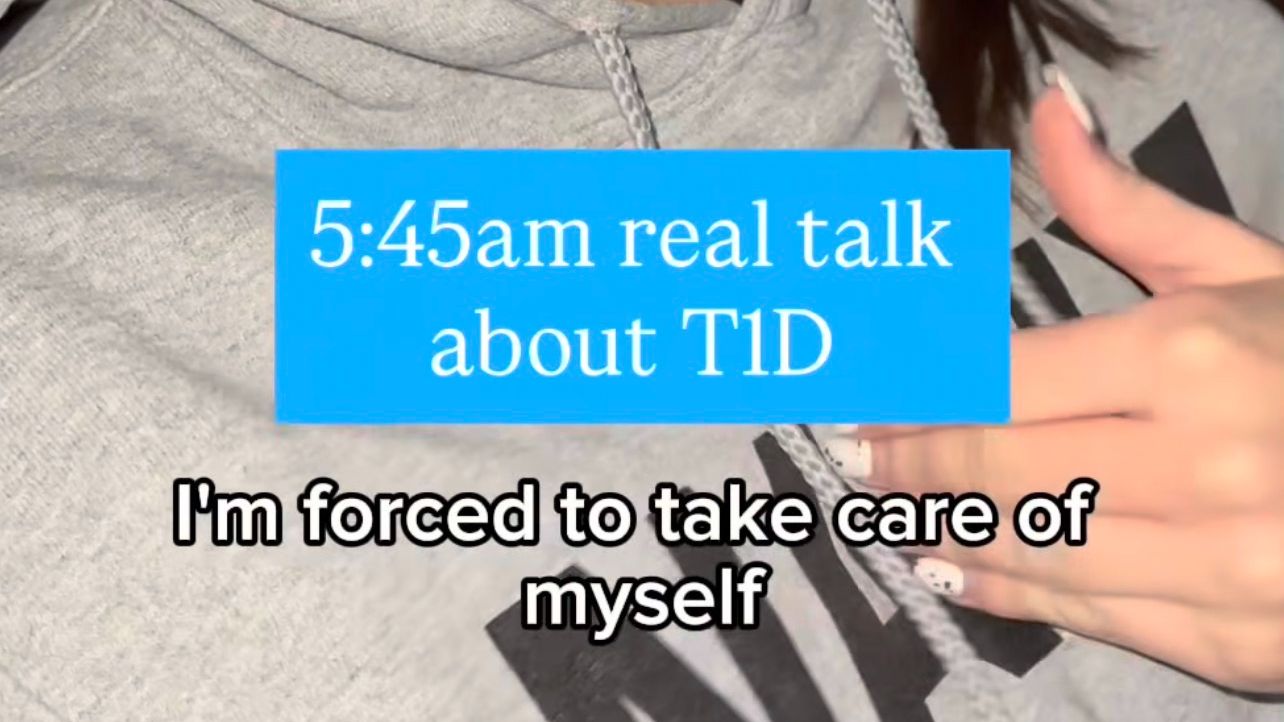
"I'm forced to take care of myself otherwise I die. I don't know a single person other than my diabuddies who shows up for themselves every single day without fail. Everyone can take a day off from something, but Type 1 Diabetes is not that thing."
And here's the rest of what I want you to hear:
Give yourself some freaking credit. You're doing a hard thing.
Diabetes forces you to level up on your self-care and self-worth. You don't get a choice. It's hard. It's tough. It's annoying. It's overwhelming. It's inconveniencing.
But also? How freaking cool that you are so devoted to yourself that you're here. That you survived. That you're making it.
Give yourself more credit.
I can't think of a single person who has to do more work in their day-to-day to stay alive than a Type 1 Diabetic.
You wake up and immediately check your blood sugar. You count carbs for every meal. You dose insulin multiple times a day. You troubleshoot highs and lows. You manage variables you can't even see. You do all of this while also living your actual life.
And stress? Stress is just one more variable in a list of 42+ factors that affect your blood sugar.
Which brings me to something important.
The 42 Factors (And Why Stress Is One of Them)
In my book (grab your free copy at typeonetypefun.com/free-book), I talk about the 42+ factors that can affect blood sugar. This is based on research from diaTribe, and it's eye-opening.
Stress and adrenaline are on that list. So are:
- Sleep (or lack of it)
- Hormones
- Illness
- Exercise
- Temperature
- Altitude
- Medication
- Dehydration
- And 34 other things
The point? Your blood sugar isn't random. And it's not your fault when it doesn't behave perfectly.
There are so many variables at play. And stress is a big one.
But here's what you can do about it.
Practical Strategies for Managing Stress-Related Blood Sugar
I'm not going to tell you to "just relax" or "don't stress." That's not helpful. Stress is part of life, and you can't always control it.
But you can develop strategies to manage your blood sugar when stress happens.
Strategy #1: Recognize the Pattern
Start paying attention to when stress-related spikes happen. Keep a log (mental or written) of:
- What was happening in your life
- How stressed you felt
- What your blood sugar did
Over time, you'll start to see patterns. Maybe you always spike before big meetings. Maybe Sunday nights are rough because you're anxious about the week ahead. Maybe relationship conflicts send you high for days.
Knowing your patterns helps you prepare.
Strategy #2: Adjust Insulin Proactively
If you know a stressful situation is coming (presentation, difficult conversation, travel), you might consider:
- Slightly increasing your basal rate temporarily
- Being more conservative with correction insulin (since stress-related highs are stubborn)
- Giving yourself more time before re-correcting (cortisol takes longer to clear than food)
This isn't about perfection. It's about understanding that stress changes the game, and adjusting accordingly.
Strategy #3: Move Your Body
Physical movement helps reduce cortisol levels. Even a 10-minute walk can help bring your blood sugar down when stress is spiking it.
This isn't about exercise as punishment. It's about using movement as a tool to manage both stress and blood sugar.
Strategy #4: Address the Stress (When Possible)
This is the hard one. Sometimes you can't change the stressful situation. But sometimes you can.
Maybe that means:
- Setting boundaries with people who stress you out
- Asking for help instead of carrying everything alone
- Saying no to commitments that drain you
- Getting support for your mental health (therapy, coaching, community)
You deserve to prioritize your well-being. Not just your physical health, but your mental and emotional health too.
Strategy #5: Give Yourself Grace
This might be the most important one.
When your blood sugar is high because of stress, it's not a moral failing. It's a physiological response.
You're not a bad diabetic. You're a human dealing with stress. And your body is responding the way bodies respond.
Be kind to yourself. You're doing the best you can with what you have.
Why the Membership Matters (Especially for Stress)
Here's the thing: managing stress and blood sugar isn't something you do once and you're done. It's ongoing. It's learning and adjusting and getting support when you need it.
That's exactly what the membership is designed for.
The waitlist is open now. Doors open in March. Founding member pricing won't last forever.
When you join, you get:
Immediate access when doors open:
- Pre-Bolusing Course: The foundation for insulin timing (stress affects this too)
- Downloadable guides and tools for tracking patterns
- Private community where people actually understand what you're going through
Coming in April:
- Carb Ratio Testing Course: So your baseline is solid even when stress throws things off
Every month:
- New mini-courses covering the 42 factors (including stress, exercise, sleep, hormones)
- Monthly live Q&A calls where you can ask: "Why does my blood sugar spike every Sunday night?" or "How do I manage insulin during stressful work weeks?"
- A community that gets the mental and emotional weight of this
This isn't just about insulin strategy. It's about having support for all of it.
The stress. The overwhelm. The 2am alarms. The feeling like you're doing it wrong when you're actually doing it right.
You need people who understand. You need education that goes beyond "count your carbs." You need ongoing support, not a one-time course you finish and forget.
Join the WAITLIST
Founding members get locked-in pricing forever. Once you're in, your price never goes up. And the price will increase after we hit a certain number of members.
This is less than what most people spend on coffee per week. And it's designed for real life. For your life.
You're Not Doing It Wrong
I need you to hear this one more time:
When stress spikes your blood sugar, you're not doing it wrong.
Your body is responding to real physiological stress. The cortisol is real. The adrenaline is real. The impact on your blood sugar is real.
And you showing up every single day to manage this? That's real too.
You don't get a day off from Type 1 Diabetes. You don't get to call in sick. You don't get to take a break.
Every single day, you wake up and do the work. You count the carbs. You dose the insulin. You troubleshoot the highs and lows. You manage the stress on top of the diabetes on top of everything else life throws at you.
That deserves credit. That deserves recognition. That deserves support.
And if you've been carrying this alone, or if you've been feeling like you should have it all figured out by now, I want you to know:
You don't have to do this alone. There's a whole community of people who understand. Who've been there. Who get it.
And we're waiting for you.
What Happens Next
The waitlist opens now. Doors open in March. Founding member pricing is only available for the first group of members.
This is your chance to join a community that actually gets it. To learn strategies that work for real life. To stop feeling alone in this.
Join the WAITLIST
And remember: You're not broken. You're not doing it wrong. You're managing something incredibly hard while also living your life.
Give yourself some freaking credit.
You're doing a hard thing. And you're doing it well.
Ready to learn how to handle your blood sugar in ANY situation?
Done with the constant highs and lows?
Stay connected with news and updates!
Join our mailing list to receive the latest news and updates from our team.
Don't worry, your information will not be shared.
We hate SPAM. We will never sell your information, for any reason.